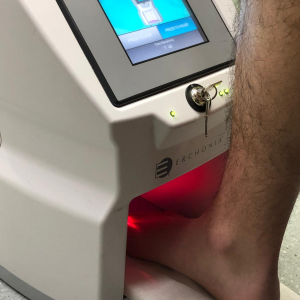
Are you experiencing ongoing heel or foot pain that is not improving with rest or basic care? Shockwave treatment is a non-invasive option that uses sound waves to support tissue repair, improve blood flow, and assist recovery in adults of all ages with conditions. This treatment is done under the care of a qualified podiatrist.
Shockwave treatment plays an important role in managing chronic pain and helping you return to daily activities with greater comfort and mobility. At My Podiatrist, we provide personalised care to your needs using evidence-informed approaches. Book Your Shockwave Treatment Today!
What is Shockwave Therapy?
Shockwave therapy is a non-invasive treatment that uses targeted sound waves to reach injured tissues in your foot, heel, or tendons. It works by stimulating blood flow and activating your body’s natural healing response to support recovery.
It may be considered for adults experiencing ongoing pain that has not improved with rest or basic care, especially when symptoms affect their daily movement.
Key reasons why this therapy is important include:
- Supports tissue repair by improving circulation
- Helps reduce persistent pain over time
- May improve mobility and function
- Targets the underlying cause rather than only the symptoms
Common Conditions Treated by Shockwave Therapy
Here are some of the common conditions that can be treated by shockwave therapy:
- Plantar fasciitis: This condition involves irritation of the thick band of tissue along the bottom of your foot. Shockwave therapy may help by stimulating blood flow and cellular repair in the fascia, with research showing meaningful improvements in pain.
- Heel spurs: Heel spurs are calcium deposits that can develop due to long-term strain on the foot, often alongside plantar fasciitis. Shockwave therapy may help by targeting the surrounding soft tissue, improving circulation, and reducing irritation associated with the spur.
- Patellar or lower-limb tendinopathy: Tendinopathy can affect various lower-limb tendons due to repetitive stress. Evidence suggests that shockwave therapy can influence pain pathways and promote healing responses in affected tendons.
- Chronic soft tissue injuries in the foot: These include long-standing strains or overuse injuries that do not settle with rest alone. Shockwave therapy may help trigger a controlled healing response, helping your body repair damaged tissue.
- Other musculoskeletal foot conditions: Conditions involving tight or overloaded structures in your foot may also be considered for this treatment. The therapy works by delivering targeted energy into the tissue, which can support circulation and tissue remodelling when clinically appropriate.
- Achilles tendinopathy: This occurs when the Achilles tendon becomes overloaded, leading to stiffness, swelling, and pain at the back of your heel. Shockwave therapy delivers mechanical stimulation to the tendon, which may support tissue regeneration.
If you are looking for a reliable provider, My Podiatrist is a suitable option due to our focus on evidence-informed care and personalised treatment planning. We offer shockwave treatment for these conditions, following a thorough assessment to determine whether this approach is appropriate for your needs.
How Shockwave Treatment Works
Here’s what you can expect during a shockwave treatment session:
Step 1: Assessment and Treatment Planning
Your podiatrist begins with a clinical assessment to understand your pain and confirm if shockwave therapy is appropriate for your condition. This ensures your treatment is tailored to your needs and aligns with evidence-based care.
Step 2: Targeting the Affected Area
The exact source of your discomfort is carefully located to guide precise treatment. A gel is applied to your skin so the shockwaves can travel effectively into the tissue.
Step 3: Delivering the Shockwaves
A handheld device emits controlled acoustic waves into the injured area of your foot or tendon. These waves stimulate blood flow and trigger your body’s natural healing response at a cellular level.
Step 4: During the Session
Treatment is usually prompt and lasts 5-15 minutes, depending on the condition. You may feel some pressure or mild discomfort, but the intensity can be adjusted to keep you comfortable.
Step 5: Aftercare and Recovery
You can generally return to your normal activities shortly after your session, with minimal disruption to your day. Some mild soreness may occur, which is a normal response as your body begins the healing process.
Step 6: Ongoing Progress and Results
Shockwave therapy is typically provided over a series of sessions to achieve the best outcome. Over time, many people notice reduced pain, improved movement, and better overall function.
Why Choose My Podiatrist for Foot Care?
When you are looking for a reliable podiatrist, choosing a clinic with proven experience and modern clinical care makes a meaningful difference to your outcomes. My Podiatrist has been providing foot care services since 1989.
Our experienced, registered podiatrists deliver tailored treatment plans using advanced equipment to support safe and effective care for a wide range of conditions.
Here’s why you can consider choosing us:
- Experienced podiatrists with clinical expertise
- Registered practitioners following Australian standards
- Advanced equipment for accurate diagnosis
- Personalised care plans for every patient
- Comprehensive services under one roof
- Modern approach, including shockwave therapy
Book Your Appointment
If your foot or heel pain is affecting your daily life, it may be time to consider professional care with shockwave treatment. Early assessment and appropriate treatment can support better outcomes and help you return to comfortable movement sooner. Relieve your foot pain today. Book your shockwave treatment with us today!
FAQs
How long does shockwave therapy take?
Shockwave therapy usually takes only a few minutes per session. A shockwave treatment appointment is brief and can be incorporated into a standard consultation. Your podiatrist will determine the appropriate duration and frequency based on your individual assessment.
Is shockwave therapy painful?
Shockwave therapy may cause mild to moderate discomfort during treatment. You may feel a tapping or pressure sensation over the affected area, particularly if it is sensitive. Your podiatrist can adjust the intensity to help maintain comfort throughout the session.
How many sessions are needed?
The number of sessions required varies depending on the condition and individual response to treatment. At My Podiatrist, a personalised treatment plan is developed following a clinical assessment, and progress is reviewed regularly. In many cases, a short course of shockwave treatment may be recommended.
Who is a suitable candidate for shockwave treatment?
Shockwave therapy may be suitable for individuals experiencing certain foot, heel, or tendon conditions. It is often considered when symptoms persist despite conservative care, such as footwear modifications or orthotic support. Your suitability for shockwave treatment will be determined by a qualified clinician following an appropriate assessment.
Are there any side effects of shockwave therapy?
Shockwave therapy is generally considered a low-risk, non-invasive treatment.
Some people may experience temporary redness, tenderness, or mild discomfort after the session.